Hathiyar,Bodh Gaya Mon-Sat 09am-7pm, Sun Closed
Call Now
+91-748887920
exRNARare
Mail Now
info@exrnarare.com
Arushi suman

Research Assistant, exRNA Therapeutics


Understanding SMAD4 impact of liver disease on ASO therapy


Introduction

SMAD4( mothers against Decapentaplegiv homolog 4) is a key signaling molecule involved in the TGF- beta pathway.


Its role in liver disease is significant, particularly in the context of fibrosis, cancer, and regenerative processes.


To understand its potential impact on antisense oligonucleotide therapy in liver disease. Some key aspects-

SMAD4 in Liver Diseases
Liver Fibrosis:

SMAD4 is involved in the activation of hepatic stellate cells (HSCs), which are central to liver fibrosis. When TGF-β signals through SMAD4, it promotes the deposition of extracellular matrix components, contributing to fibrosis


Liver cancer;

Loss of SMAD4 in the liver has been shown to reduce fibrosis progression in some experimental models by disrupting the TGF-β signaling pathway.


  • SMAD4 functions as a tumor suppressor in liver cancer, particularly hepatocellular carcinoma (HCC). Its deletion or mutation can promote liver tumorigenesis.
  • Reduced SMAD4 expression has been linked to poor prognosis in liver cancer patients.
Liver Regeneration:
  • SMAD4 plays a role in liver regeneration, especially after injury or partial hepatectomy. The TGF-β/SMAD4 axis regulates the balance between cell proliferation and apoptosis during liver regeneration.
impact on ASO Therapy

Antisense oligonucleotides (ASOs) are designed to modulate gene expression by targeting specific RNA sequences. Their impact can vary depending on the molecular context, including factors like SMAD4 status in liver diseases.


1. Targeting Fibrosis:
  • ASOs could potentially be used to inhibit SMAD4 expression or its downstream effectors to slow the progression of liver fibrosis. Reducing SMAD4 activity may dampen TGF-β signaling, leading to reduced activation of HSCs and lower collagen deposition.
2. Cancer Therapy:
  • In liver cancer, where SMAD4 acts as a tumor suppressor, ASOs designed to enhance SMAD4 expression or restore its function may have therapeutic value.
  • Conversely, in cases where SMAD4 is overactive and contributes to fibrosis-driven carcinogenesis, ASOs could be used to inhibit its expression.
3. its expression. Liver Regeneration:
  • Modulating SMAD4 using ASOs in the context of liver regeneration could be beneficial or harmful depending on the timing and extent. Excessive inhibition of SMAD4 could impair regenerative responses, while targeted modulation might promote regeneration without fibrosis.
Challenges in ASO Therapy for Liver Diseases
  • Delivery Efficiency: Achieving efficient delivery of ASOs to liver cells, especially specific cell types (e.g., HSCs, hepatocytes), remains a challenge.
  • Off-target Effects: SMAD4 signaling is involved in multiple pathways, so off-target effects or unwanted inhibition in other tissues may limit ASO utility.
  • Fibrosis and Cancer Progression: Since SMAD4 can both promote fibrosis and suppress cancer, careful balancing of ASO activity is essential to avoid promoting tumorigenesis while inhibiting fibrosis.

Conclusion

The role of SMAD4 in liver diseases has both positive and negative aspects depending on the disease context (fibrosis vs. cancer). ASO therapy targeting SMAD4 or its related pathways could be promising, but it would require a nuanced approach tailored to specific disease stages and conditions to avoid unintended consequences.


REFERENCES 1 : Click Me

Arushi suman

Research Assistant, exRNA Therapeutics


Unlocking the concept of wilson’s diseases


Introduction

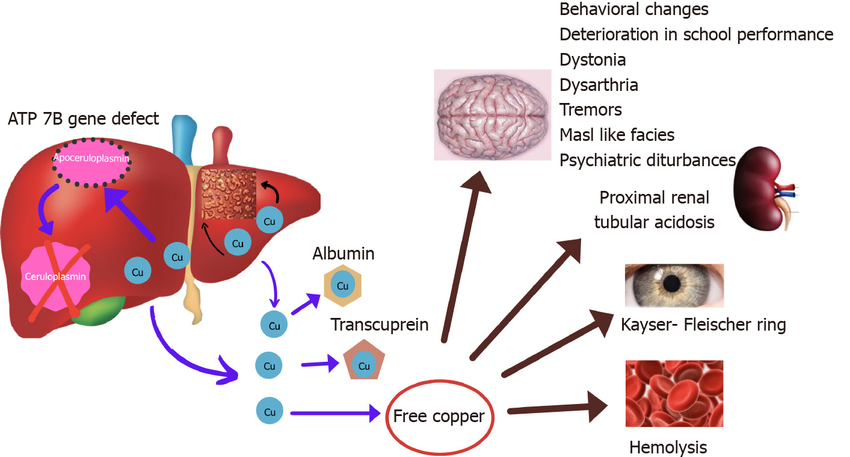
Wilson disease is defined as a rare inherited disorder that affects the body function to remove excess copper from the body, eventually leading to its accumulation in vital organs such as the liver, brain, eyes and other organs. While conventional traces of copper from diet are essential for normal body function. Excess of it can be fatal. Wilson's disease is caused by mutations in the ATP7B gene. The ATP7B gene provides instructions for making a protein that plays a critical role in the transport of copper from the liver to other parts of the body, especially for its excretion into bile. In individuals with Wilson’s disease, mutations in the ATP7B gene lead to improper copper transport, resulting in excessive copper accumulation in the liver, brain, and other tissues, causing toxicity.

Italian Trulli


Wilson’s disease give rise to mixed symptoms pertaining to hepatic (related to liver) and neurological (related to brain) which include yellowish skin and eyes (jaundice) ascites (buildup of fluid in stomach) vomiting, muscle stiffness, tremors, hallucinations etc.


Genetic and Molecular Aspects
  • Wilson disease is inherited in an autosomal recessive manner, meaning an individual needs two defective copies of ATP7B to develop the disorder. To date, over 300 different mutations in ATP7B have been identified, including missense, nonsense, and frameshift mutations. The specific mutation type can influence disease severity and the onset of symptoms.
Treatment Approaches

Managing Wilson disease focuses on reducing copper levels using chelating agents like penicillamine or trientine, which bind to copper and help eliminate it through urine. Zinc supplements can also be prescribed to block copper absorption in the intestine. In advanced liver disease cases, liver transplantation may be required.


Prevalence of wilson’s diseases

A 2024 study demonstrated that there are 3 crore cases of Wilson’s disease worldwide by the beginning of the new millennium. It could be asserted that due to the advent of advanced and improved methods such as the widespread availability of cheaper molecular genetic diagnostic methods for the diagnosis of Wilson’s disease could increase the prevalence. Also, increased awareness of Wilson’s disease, could be argued in the development of the disease.


With a carrier frequency of 1 in every 90 individuals, this disease affects 1 in 30,000 people globally.


REFERENCES 1 : Click Me