Autosomal Recessive Hypohidrotic Ectodermal Dysplasia: Understanding a Rare Genetic Disorder
Autosomal Recessive Hypohidrotic Ectodermal Dysplasia (AR-HED) is a rare genetic disorder that affects the development of ectodermal tissues, which include the skin, hair, nails, teeth, and sweat glands. As a condition that belongs to a group of disorders known as ectodermal dysplasias, AR-HED is characterized by abnormal development of these tissues, leading to a range of physical symptoms and challenges.
AR-HED is one of the rarer forms of ectodermal dysplasia, inherited in an autosomal recessive manner. This means that a child must inherit two copies of the mutated gene—one from each parent—to develop the disorder. Parents who each carry one copy of the mutated gene typically do not show symptoms of the disorder, making the condition particularly challenging to predict or diagnose before symptoms manifest.
Genetic Basis of AR-HED
AR-HED is caused by mutations in specific genes that are essential for the normal development of ectodermal tissues. The most commonly affected gene in AR-HED is the EDARADD gene, which plays a crucial role in the development of the skin, hair, and other ectodermal derivatives. When this gene is mutated, the signaling pathways that guide the proper formation of these tissues are disrupted, leading to the symptoms associated with AR-HED.
Because AR-HED is inherited in an autosomal recessive manner, both parents must be carriers of the mutated gene. When two carriers have a child, there is a 25% chance that the child will inherit both mutated copies of the gene and develop AR-HED. There is also a 50% chance that the child will be a carrier like the parents, and a 25% chance that the child will inherit two normal copies of the gene.
Clinical Features and Diagnosis
The clinical features of AR-HED can vary in severity but typically include:
- Hypohidrosis (reduced ability to sweat): One of the hallmark symptoms, hypohidrosis can lead to difficulty regulating body temperature, especially in hot environments.
- Hypotrichosis (sparse hair): Individuals with AR-HED often have thin, fragile hair on the scalp and body.
- Dental anomalies: Missing teeth (hypodontia) or abnormal tooth shape are common in AR-HED, which can affect both appearance and oral health.
- Dry skin: Due to the reduced number of sweat glands, individuals often have dry, scaly skin that can be prone to eczema and other dermatological issues.
Diagnosis of AR-HED is typically based on the presence of these clinical features, combined with a family history of the disorder and genetic testing to confirm the presence of mutations in the relevant genes.
Challenges and Management
Living with AR-HED presents several challenges, particularly in managing the symptoms associated with the disorder. Hypohidrosis, for example, requires careful monitoring of body temperature, particularly in children, who may be more vulnerable to heat-related illnesses. Protective measures, such as avoiding excessive heat, staying hydrated, and using cooling vests, can be crucial in preventing overheating.
Dental issues also require specialized care. Prosthetic teeth or dental implants may be necessary to replace missing teeth, while regular dental check-ups are essential to monitor and manage any ongoing dental concerns.
In addition to physical symptoms, the psychological and social impacts of AR-HED should not be overlooked. Individuals with AR-HED may experience self-esteem issues related to their appearance, and providing support through counseling and peer groups can be invaluable.
Advances in Research and Treatment
Ongoing research into AR-HED is focused on better understanding the genetic mechanisms underlying the disorder and developing targeted therapies that can address its root causes. Gene therapy, for example, holds promise as a potential treatment avenue, aiming to correct the genetic mutations responsible for the disorder.
Moreover, supportive treatments that address specific symptoms, such as new dental technologies or skin care products designed for dry, sensitive skin, are continually being developed. The goal of current research is not only to improve the quality of life for those with AR-HED but also to move towards more personalized and effective treatments.
Conclusion
Autosomal Recessive Hypohidrotic Ectodermal Dysplasia is a rare but challenging disorder that affects multiple aspects of an individual's life. While the condition presents significant hurdles, advancements in research and supportive care offer hope for better management and treatment options. By raising awareness and fostering research, we can work towards a future where individuals with AR-HED and similar rare disorders can lead healthier, more fulfilling lives.
As we continue to explore the genetic and clinical landscape of AR-HED, collaboration between patients, healthcare providers, and researchers will be key in driving progress. Together, we can ensure that those affected by AR-HED receive the care, support, and attention they deserve.
The Fragile Skin of Time: Understanding Acrogeria Gottron Syndrome
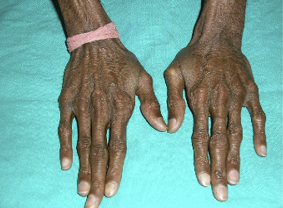
Acrogenic Gottron syndrome is a rare genetic skin condition characterized by premature aging of the skin, particularly in the hands and feet and other connective tissues. The prevalence of this syndrome is extremely low, with only a few documented cases worldwide, making it a very rare disorder. But it falls under the umbrella of connective tissue disorders. The primary symptom of Acrogeria is thinning and wrinkling of the skin (atrophy).Individuals with Acrogeria Gottron syndrome commonly exhibit symptoms such as thin, fragile skin, particularly on the hands and face, hollow cheek, ‘owl eyed’ appearance, beaked nose, thin lips, reduced elasticity and a distinctive appearance reminiscent of aging. Other symptoms may include joint laxity, vascular abnormalities, and in some cases, ocular issues such as cataracts. Over time, it may lead to more pronounced facial features and changes in the fingers and toes. Despite the skin abnormalities, the condition does not generally affect overall lifespan or intellectual development. The condition is believed to be caused by genetic mutations in specific genes involved in collagen synthesis and maintenance. In some cases, it may be inherited in an Autosomal dominant or recessive manner. Although the exact genetic basis can vary, recent research has implicated the COL5A1, COL3A1 and COL1A1 genes as associated with similar connective tissue disorders, reflecting the underlying collagen defects that lead to the observed symptoms. Currently, there is no cure for Acrogeria Gottron syndrome, and Treatment is largely supportive and focuses on managing symptoms. Dermatological care to address skin fragility, physical therapy for joint issues, avoiding trauma, and regular monitoring of joint function are common strategies. Genetic counseling may be recommended for families with a history of the syndrome.